
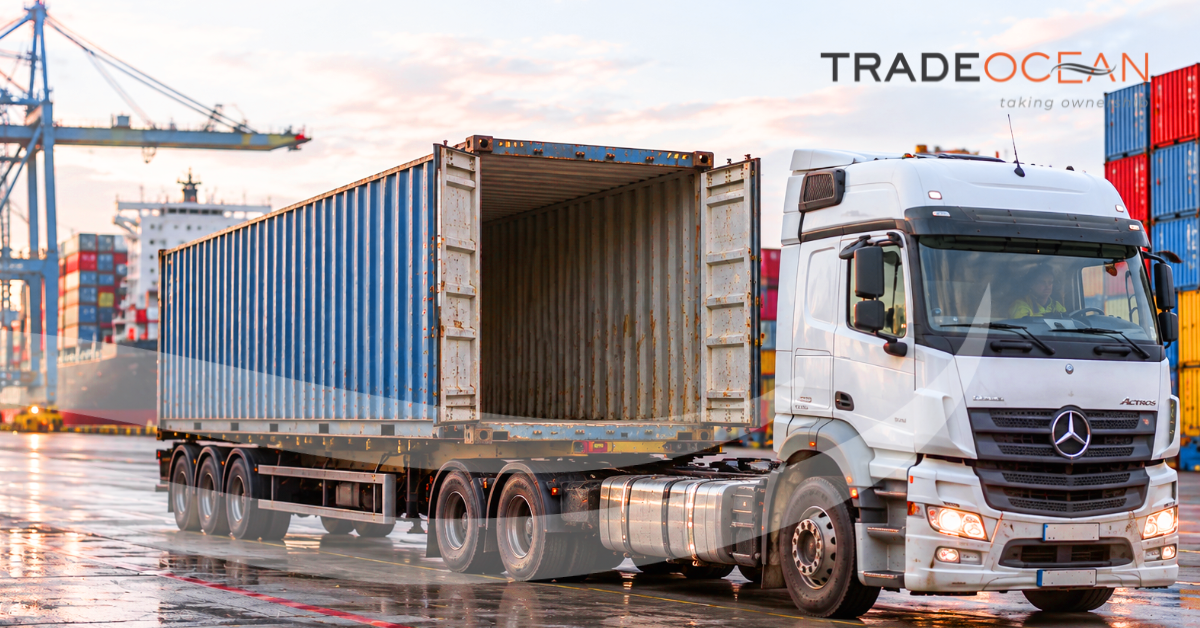
Why the logistics bill keeps moving after the goods are delivered
Why would anyone pay to ship an empty box?
Because the next shipment cannot move until that box is in the right place.
We usually follow the goods: the machinery arriving at a factory, the stock reaching a warehouse or the fruit leaving a packhouse. Once the cargo has been delivered, the container, truck and reusable packaging still need a plan.
For businesses moving goods through South Africa and Namibia, that next journey helps explain costs that can be easy to overlook when comparing freight quotes.
The goods arrive and the equipment moves on
An import container delivered inland might return to a depot, collect another approved load or travel back towards a port. Its next job depends on where equipment is needed, which shipping line controls it and whether its size, type and condition suit the cargo.
UNCTAD’s 2022 maritime logistics guidebook estimates that about 20% of containers carried by sea are being repositioned empty. That is roughly one in five moving without goods inside. It is a global estimate, but it illustrates how much work sits behind getting a box to its next customer. [1]
An empty container still takes up a vessel slot. Moving it can require road or rail transport, terminal handling and depot space. Those activities use equipment, people and time, even when there is no cargo to deliver. [2]
An empty truck still has a running cost
A truck returning from a delivery still uses fuel and driver time. Maintenance, insurance and vehicle finance also need to be covered across the work it performs. Finding a suitable return load can help, but the cargo must fit the vehicle, route and schedule.
A South African study published in 2022 followed eight food-grade tanker trucks over three months and 134 trips. It found that 53.1% of their distance was travelled empty. Cleaning requirements between food loads were an important reason. This was one specialist operation, rather than a national trucking average. [3]
The case shows why a vehicle can be available without being ready for the next load. The journey to a wash bay, inspection point or suitable collection location has to be included in the plan.
The right empty container matters
A yard full of dry containers will not solve an exporter’s need for refrigerated equipment. Availability depends on having the right container in the right place, in time for loading.
South Africa’s Perishable Products Export Control Board reported challenges with empty-container availability during the peak citrus and table grape periods in its 2025/26 operations report. It also noted that container port constraints encouraged greater use of specialised refrigerated vessels. [4]
For an exporter, an empty container is therefore part of getting the product to market. Equipment planning needs to begin while the goods are still being prepared.
Ships and packaging have another journey too
Bulk carriers and tankers may sail without commercial cargo to reach their next loading port. These are often called ballast voyages. Fuel, crew and vessel operating costs continue during that movement. Container ships also carry empty boxes as part of their equipment repositioning work. These are different operations, but both keep transport capacity circulating. [2, 5]
The same question applies on a smaller scale to reusable pallets, crates and bins. After delivery, they may need collection, sorting, cleaning or repair before reuse. Collapsible crates can reduce the space needed for empty returns, but someone still has to organise the collection and next handover. [6]
How those costs reach the customer
Some repositioning costs are built into a transport provider’s overall rates. Other services may appear as separate charges under the agreed terms. An empty movement does not automatically mean an additional invoice to every importer. [2]
Container-use charges can also continue after delivery if the empty is returned outside the agreed free time. Detention generally concerns container use outside the terminal; storage concerns use of space. Some carriers combine demurrage and detention, so check the terms for the particular shipment. [7]
Taking Ownership of the complete journey
Before the goods arrive, confirm who will arrange the empty return, the nominated depot and the return deadline. Make sure the receiving team can unload within the planned window, and agree what happens to any returnable packaging.
November is a useful time to check these arrangements against your final deliveries and receiving hours for the year. A warehouse closure or missed collection can leave equipment waiting when it should be moving to its next job.
At Trade Ocean, Taking Ownership means paying attention to the handovers around your shipment. Bring us your cargo requirements and delivery plans so we can help you understand the arrangements and costs across the journey.
Speak to the Trade Ocean team about planning your next shipment through South Africa and Namibia.
Sources
- UNCTAD (2022). Building Capacity to Manage Risks and Enhance Resilience: A Guidebook for Ports — Section 3.2, Shipping Network Stress. Source of the estimate that approximately 20% of containers carried by sea are repositioned empty.
- Port Economics, Management and Policy. Chapter 6.2 — Containers: The Box and Chassis Markets. Background on empty-container movements, handling, storage and repositioning costs.
- South African Journal of Industrial Engineering (2022). Development of Emission Intensity Factors for a South African Road-Freight Logistics Service Provider. The South African tanker study reporting 53.1% empty running across eight trucks and 134 trips.
- Perishable Products Export Control Board (2025/26). Annual Report — Operations Report. Reports empty-container availability challenges during peak citrus and table grape periods.
- International Maritime Organization. Ballast Water Management. Explains the role of ballast water in maintaining safe vessel operating conditions.
- CHEP South Africa and IFCO. Reusable Plastic Crates and Recollection — Closing the Loop in the IFCO SmartCycle. Background on collapsible crates, empty returns, inspection, cleaning and reuse.
- Maersk. Terms for Detention and Demurrage. Definitions of free time, storage, detention, demurrage and combined charges.