Your cargo can be packed, your documents can be in order and your truck can be ready to leave.
Then a road closes.
Civil unrest can change the risk around a route within minutes. Delivery time is no longer the only concern. Businesses need to decide whether the cargo can move safely at all.
South Africa experienced this during the July 2021 unrest.
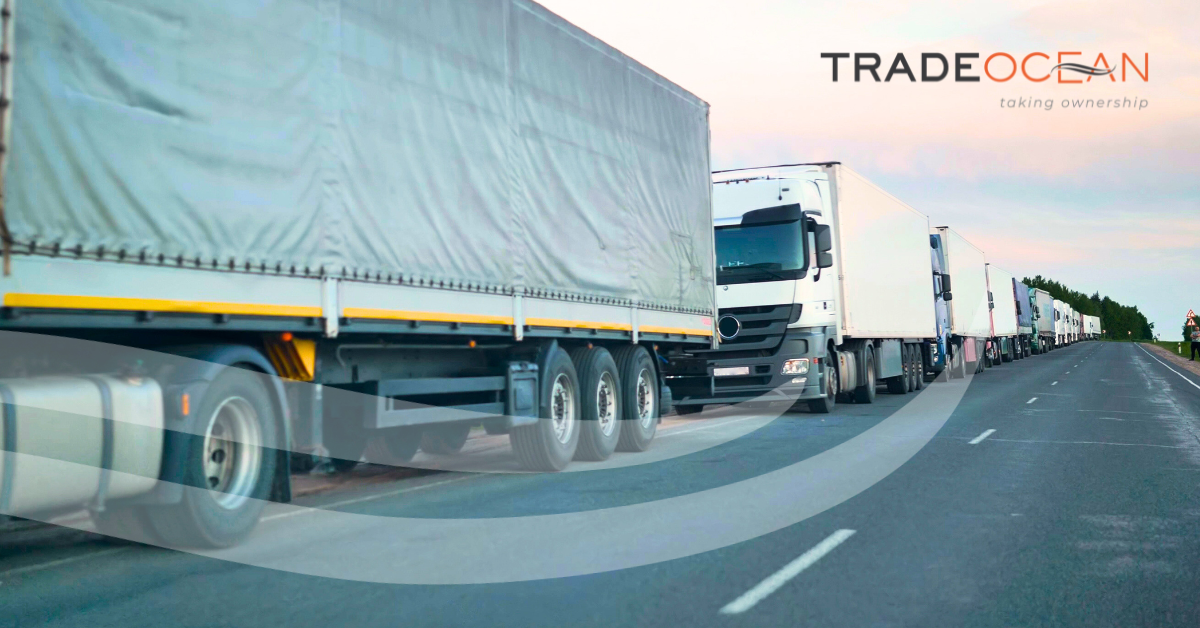
What began as protests in KwaZulu-Natal quickly developed into widespread violence and looting across parts of KwaZulu-Natal and Gauteng. Roads were blocked, trucks were attacked, warehouses were damaged and the movement of cargo slowed or stopped.
Five years later, the scale of the disruption still offers important lessons for South African and regional supply chains.
When the N3 stops, much more than traffic is affected
The N3 between Durban and Gauteng is one of South Africa’s busiest freight routes. It connects the Port of Durban with the country’s largest economic centre and carries cargo destined for other parts of Southern Africa.
At the time of the unrest, around 9,000 heavy vehicles travelled along the N3 each day, carrying more than 40 million tonnes of freight a year.
When sections of the route closed, cargo between Durban and Johannesburg came to a standstill. The impact extended into neighbouring countries that depend on South African ports and transport corridors.
Source: Engineering News
More than 40 trucks were damaged during the unrest, including 26 at Mooi River. The estimated cost of the vehicles alone was between R250 million and R300 million.
Source: Parliamentary Monitoring Group
The damage to the trucks was only one part of the loss.
Each vehicle taken off the road could mean:
- Cargo missing its vessel
- Containers not being collected or returned
- Raw materials failing to reach a factory
- Fresh produce losing quality while it waits
- Drivers and operational teams being placed in danger
- Additional storage, detention and demurrage charges
- Customers running out of stock
A roadblock can therefore affect businesses and customers hundreds or even thousands of kilometres away.
The port may be working. Getting there is the problem
A port depends on the roads and railway lines around it.
During the 2021 unrest, operations around Durban and Richards Bay were disrupted. Freight rail services were suspended, while road access to the ports became difficult or unsafe.
This happened during South Africa’s citrus export season. More than half of the country’s citrus exports were moving through Durban at the time.
Source: US Department of Agriculture
Fruit does not stop ripening because a road is closed. If it cannot reach the port, the exporter may miss the vessel, lose marketable quality or fail to meet the customer’s delivery window.
Sugar producers faced similar challenges. Mills closed after trucks were hijacked, facilities were threatened and cane fields were set alight.
Early estimates indicated that approximately 300,000 tonnes of sugar cane were burnt, representing around R180 million in lost grower revenue.
Source: Reuters
The disruption may last a few days. For farmers and exporters, the consequences can affect an entire harvest.
The cost reached far beyond the cargo
The human cost of the unrest was devastating.
According to the South African Human Rights Commission, around 350 people died. The Commission estimated that approximately R50 billion was lost from the South African economy, with two million jobs lost or affected.
Source: South African Government News Agency
Other assessments found that:
- Approximately 40,000 businesses were affected
- Around 50,000 informal traders were affected
- About 150,000 jobs were placed at risk
- Approximately 3,000 stores were looted
- More than 1,100 retail stores were damaged
Warehouses, factories and distribution facilities were also among the affected properties.
Source: ACCORD
These figures show how quickly a transport disruption can become a much wider economic and community crisis.
The insurance claims give another indication of the scale.
Sasria reported that verified claims from the July 2021 unrest reached approximately R34 billion. In an average year, Sasria managed around 3,772 claims. The unrest generated 17,589 claims.
Sources: Sasria Integrated Report and Parliamentary Monitoring Group
This is a regional supply chain risk
South Africa is not the only country in the region to experience this type of disruption.
Following Mozambique’s disputed 2024 elections, protests resulted in roadblocks and temporary border closures. The Port of Maputo later reported a 1% decline in its 2024 cargo volumes, which it attributed mainly to the post-election disruption.
Source: Reuters
One per cent may sound small. Across a major port, it represents a significant amount of cargo that was delayed, diverted or did not move as planned.
It also affected businesses outside Mozambique. Mines, manufacturers and transporters throughout the region depend on the Port of Maputo and the corridors leading to it.
Supply chains cross borders, so disruption does too.
What can businesses do before a route closes?
Nobody can predict exactly when or where civil unrest will happen. Businesses can still prepare for the possibility that a route, border post or port may suddenly become unavailable.
Know where your route is most vulnerable
Identify the roads, ports, border posts and warehouses that have few practical alternatives. This makes it easier to assess another option when conditions change.
Give time-sensitive cargo more room
Cargo with a fixed sailing date, limited shelf life or strict delivery window needs careful planning. An earlier departure may provide valuable breathing room if the route is disrupted.
Check your insurance cover
Damage caused by riots, strikes and public disorder may not be included in an ordinary insurance policy.
Businesses should confirm whether their vehicles, cargo, warehouses and potential business interruptions have the appropriate Sasria or specialist cover before it is needed.
Agree on how updates will be handled
When cargo cannot move, customers need clear information.
Where is the shipment? What has stopped? Are alternative routes being considered? When will the next update be provided?
Even when there is no immediate solution, regular and honest communication helps customers make decisions about stock, production and their own delivery commitments.
Keep people safe
No delivery is worth placing a driver, port worker or operational team in unnecessary danger.
Sometimes the right logistics decision is to wait until the route is safe.
What July 2021 taught us
The unrest showed how closely connected our supply chains are.
A road closure in KwaZulu-Natal can affect a factory in Gauteng. A blocked border in Mozambique can disrupt a mine in another country. One delayed truck can lead to a missed vessel, an empty shelf or a stopped production line.
Strong logistics planning does not assume that the original route will always remain available. It considers where the risks are, what the alternatives may be and how decisions will be communicated when circumstances change.
At Trade Ocean, taking ownership means staying close to your cargo, communicating honestly and helping you make the next safe and practical decision.
Because when the road ahead closes, that next decision matters.